The Alocasia Nebula is an enchanting member of the Alocasia genus in the Araceae family. It comes from the lush landscapes of Kalimantan, Indonesia. The island’s rich biodiversity is well-known. It’s a treasure trove of unique flora and fauna. The Nebula is a shining example of the island’s botanical wonders.

What Sets Alocasia Nebula Apart?
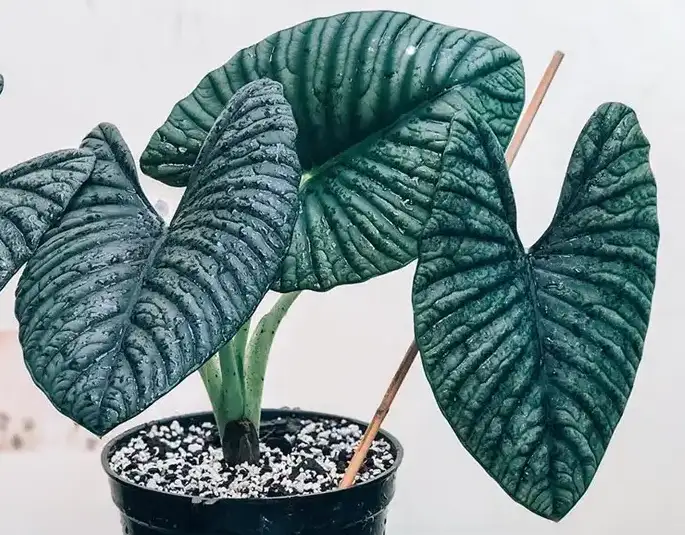
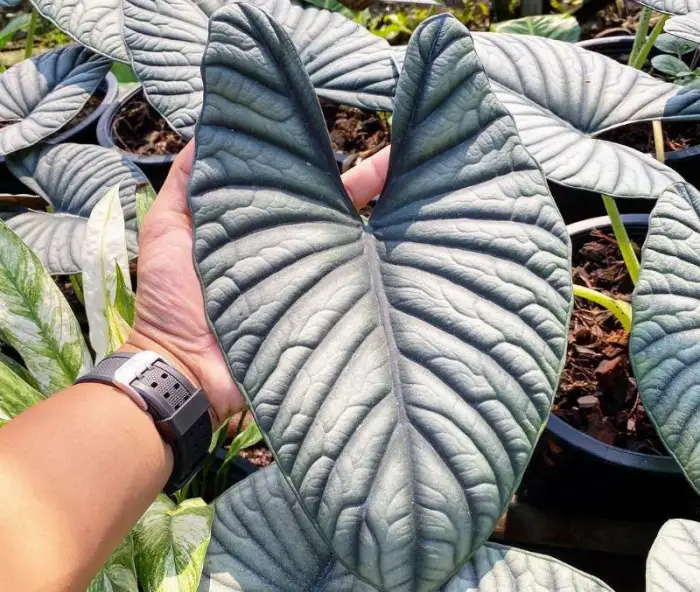
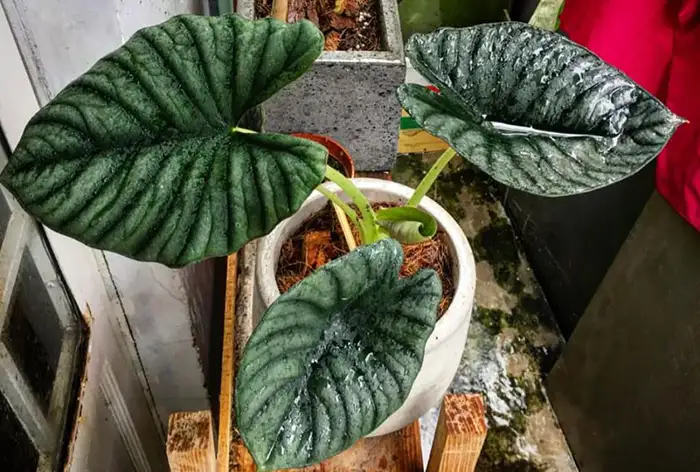
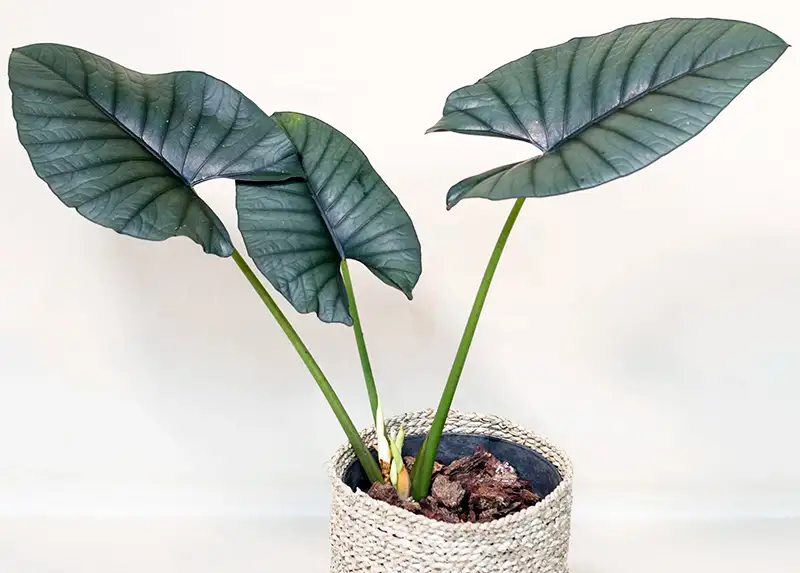
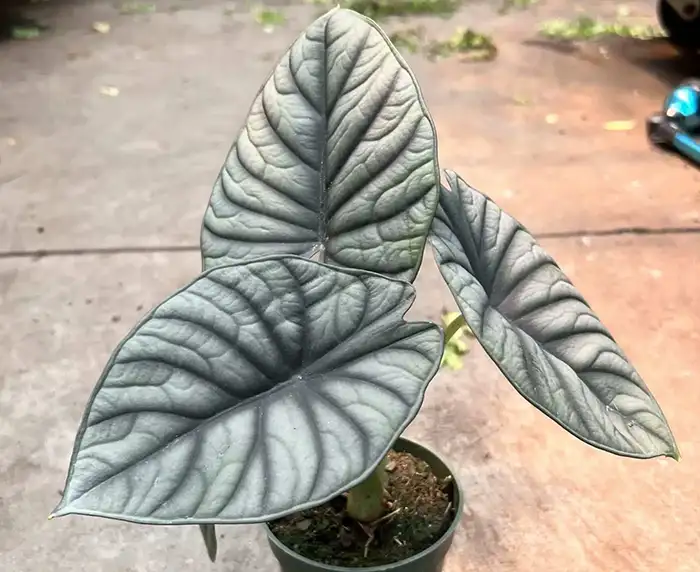
Nebula stands out in the Alocasia family. This is due to its rare and exotic look. Its leaves may remind you of the betel leaves in the region. But, they have a unique charm of their own. The leaves are a deep, lush green. They have prominent, raised textures along their veins. This creates a stunning effect. It almost looks like a work of art.
Physical Characteristics
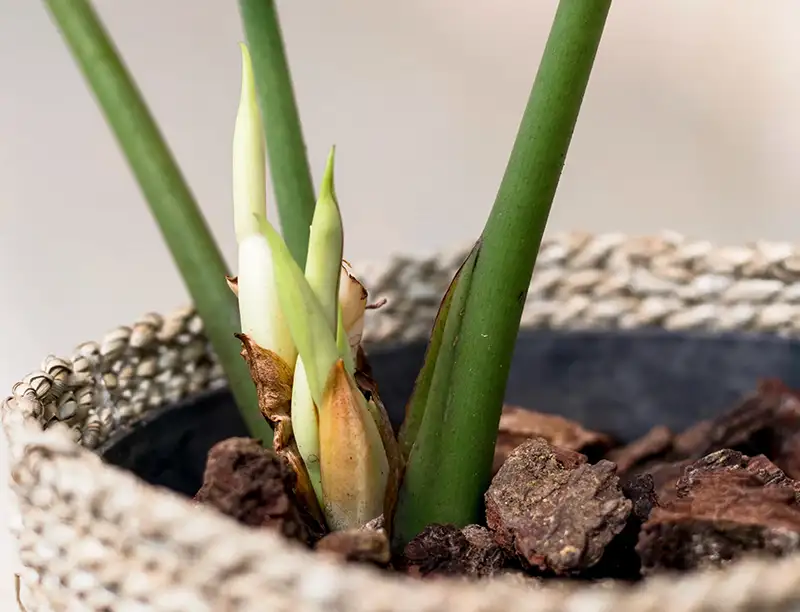
What distinguishes the Nebula is its lack of an above-ground stem. Instead, it has an underground rhizome. From it, its leaves and a striking cluster of flowers emerge on stalks. These stalks reach 15-30 cm in height.
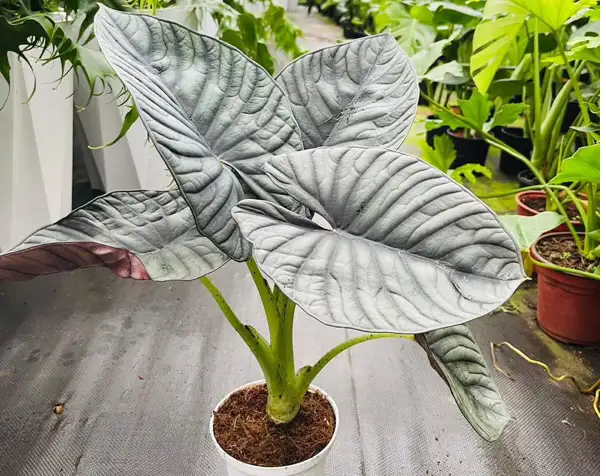
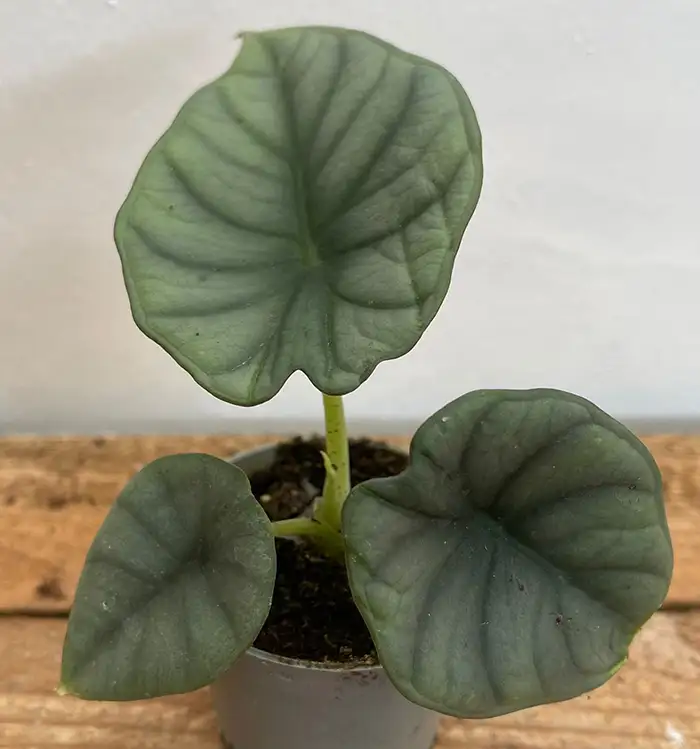
The leaves come in heart-shaped or spearhead-like forms and are sized themselves. When young, these leaves are round and have a color palette like the Alocasia Dragon Scale. They also have a unique vein pattern. As the plant matures, the leaves change shape. They go from round to a silvery-gray and blue-gray color. The new colors are like those of the Alocasia Silver Dragon.
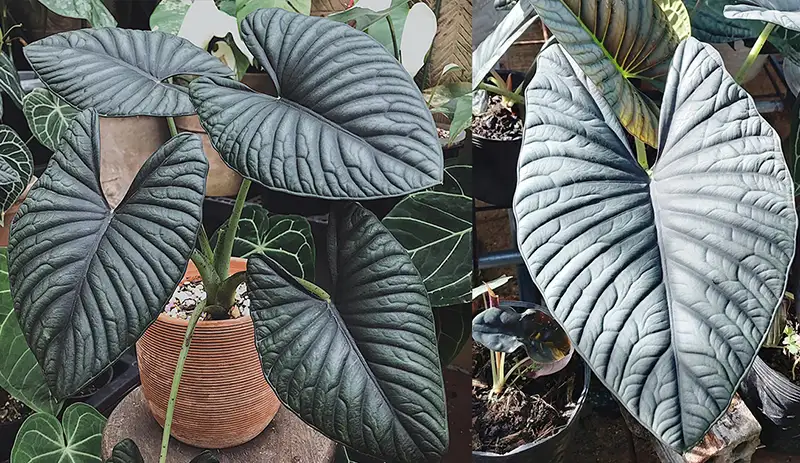
One of the Nebula’s most distinctive traits is the striking contrast in the look of its leaves. This is rare among Alocasia varieties. The leaves’ top surface has a delicate, satin-like texture. It is in a gray-green shade and has dark, sunken veins. In contrast, the undersides of the leaves are blood-red. They have prominent veins, adding to their mystique.
The Nebula’s flower cluster consists of a spadix and spathe. A white spathe protects the long spadix, which is adorned with numerous small flowers. These flowers become white, fleshy fruits. But, they are not known for their smell.
Uses and Applications
The Alocasia Nebula’s unique appeal is like the tropical landscapes of Latin America. It has been gaining popularity. Plant enthusiasts prize this plant for its exceptional leaves. They see it as a coveted addition to gardens and plant collections.
Its unique leaf shape and captivating color make it great for interior decoration. It works in offices, workstations, reception areas, and living spaces. The Nebula thrives in partial shade. It comes in different sizes. This allows for flexible placement options. It can go in small pots on desks and window sills. Or, it can go in larger indoor planters.

Also, the Alocasia Nebula is a great gift for plant enthusiasts on special occasions. This is thanks to its unique looks and ability to adapt. This plant makes spaces look better. It also adds a touch of tropical style to everyday places.
Alocasia Nebula Care Guide
Soil
The choice of soil for your Nebula can impact its care and overall health. Alocasia plants have rhizomes and tubers in their roots. So, consider this when making the soil mix.
We recommend mixing equal parts of regular soil, peat, and perlite. Peat is an organic soil layer. It enriches the media for your Alocasia Nebula. Perlite ensures good aeration and is lightweight.
The consistency of soil and peat may vary, so keep in mind that the final soil mix should have good drainage. Don’t hesitate to add a bit more perlite if it feels too heavy.
Light
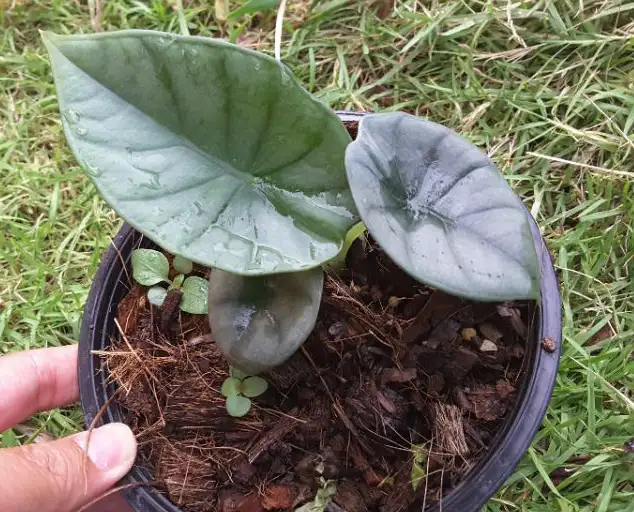
Give your Alocasia Nebula plenty of indirect light. But, avoid direct sunlight at all costs. Its delicate leaves can get sunburned. You don’t want to harm their beauty.
You can place it in partial shade or even better, under artificial light. East-facing windows work well, and a bright bathroom is also suitable.
Watering
Your Nebula thrives when you keep the soil moist. If this sounds ambiguous, let us clarify; this is a crucial aspect of mastering the care for your Nebula.
The plant requires soil that’s between moist and semi-dry. This means watering frequently but not . A handy trick is to use a spray bottle. Use a pressurized spray tool to mist a fine spray with one push of a button.
You can also use a regular spray bottle. The key is to evenly and gently mist the soil until you feel the top layer is wet. Then, wait until the top layer becomes dry to the touch before watering again.
This means you should water your Alocasia Nebula about three times a week in the dry season. In the rainy season, water it about twice a week. The soil should be evenly moist, not soggy. Be cautious not to use tap water for watering your Nebula.
Temperature
Alocasia Nebula thrives in warmth. Ideally, the temperature should range from 15 to 26 degrees Celsius. Cold temperatures for a long time will make the plant dormant. This will cause it to shed some or all of its leaves.
These plants are also not frost-tolerant. They will drop their leaves if hit by sudden winds or high temperatures. Dormancy doesn’t mean the plant is dead! Don’t give up. The tubers are still alive. With time and the right conditions, they will sprout new leaves.
Humidity
Alocasia Nebula enjoys high humidity. You’ll need to place it in a container, like a terrarium or a humidity dome. Or, you’ll have to buy a humidifier.
Typical humidity around 50% should suffice. Some people find that their Alocasia thrives best in water, not soil. This keeps the air around the plant humid. It’s from water evaporation in the container.
You can try the same with humidity trays. But, you’ll likely notice some edges drying out despite your best efforts. You’ll need to strive for at least 65% humidity or higher if you want your Alocasia to reach its full potential.

Fertilizing
Fertilize your Nebula with care. Fertilizer burn can occur with these plants. They’ll also stagnate and wilt with too little nutrition. Use liquid fertilizer but dilute it to ¼ of its strength and apply it after watering.
Propagating Alocasia
There are two methods to propagate your Alocasia Nebula. You can propagate it by division, but you can also put new plants in water or soil afterward. Most people grow propagated Alocasia in soil, but they can also thrive in water.
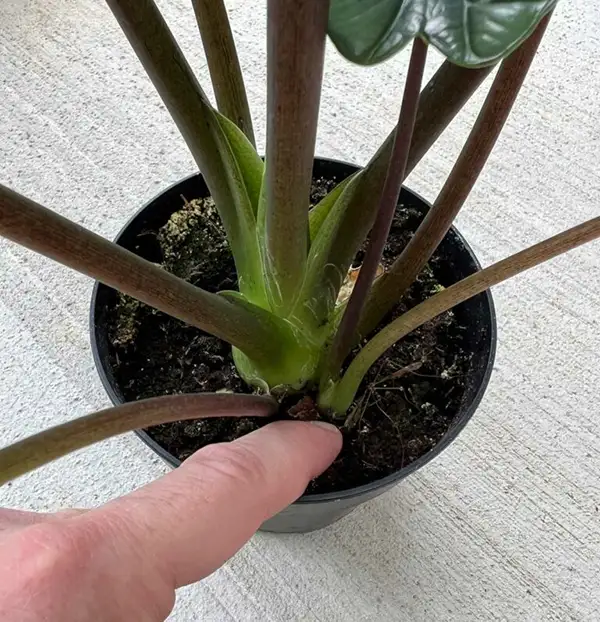
We recommend treating this plant gently. Handle it delicately to avoid stress. Propagation is best done when you’re repotting your Alocasia Nebula. When you take it out of the pot, you’ll notice that it grows in clusters. Here’s what you should do:
-
Remove the plant from its pot and shake off the soil. If necessary, spray the root clump to see what’s happening.
-
You’ll see that your plant is growing in a cluster connected by roots. Examine the plants and choose which part to separate. It should be healthy, have one or two leaves, and its own root system.
-
Carefully separate the cluster from the main plant. Use a sterile knife or scissors if the roots are too tangled or connected.
-
Prepare your new pot if you’re planting it in soil. It’s not a cutting, so no need to wait for roots. You can put it directly into the new pot with the right soil. We suggest moistening the soil first and creating a hole to accommodate the new plant.
-
Place the plant in it, don’t bury it too deep, and water it again. If you’re putting it in water, use distilled water, aquarium water, or rainwater. It’s as simple as that.
-
Done! Your new Alocasia Nebula is ready and may start growing new leaves soon. Ensure it gets extra humidity, a bit of warmth, and no direct sunlight.
Growth
This plant has the potential for fast growth. In summer, you can expect new leaves every month. With care, they may come even more often. Each later leaf is larger than the previous one. As an adult plant, Nebula can reach heights of up to 90 cm, with mature leaves measuring up to 40 cm.
It grows in a bushy style, and with the right care, you’ll have a sizable Alocasia Nebula bush to admire.
Pot
Like most rhizomatous plants, Nebula prefers a slightly snug pot. Don’t be tempted to upgrade it to a giant pot, thinking the plant will produce more branches with more space. This will only lead to waterlogged and compacted soil around the tubers. It will cause them to slowly decay and rot.
Thus, we recommend planting your Alocasia in a smaller pot. It should be large enough to comfortably fit its roots. You can repot yearly to add fresh soil. But, only make the pot bigger if you must.
When selecting a pot, ensure it has drainage holes. If you overwater your plant, use a terracotta pot. It absorbs excess moisture you might provide to your plant.
Common Issues with Alocasia Nebula
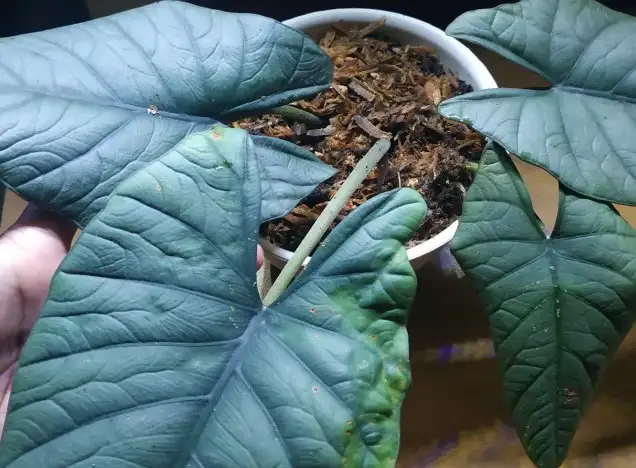
We’ve said this plant is delicate and sensitive. The same is true for pests and diseases. It’s prone to many problems. These include stem and root rot. Also, bacterial leaf spots and Xanthomonas. And pests like whiteflies, scale insects, and mealybugs.
We’re not sure why this plant attracts all these troubles. But, it may be due to its tender flesh and people not knowing how to care for it. If the plant is healthy and in good condition, it’s not easily affected by diseases and pests.
Let’s take a look at what you can do to prevent these issues and handle them if they arise.
Alocasia Root Rot

Rotten roots will make the plant wither. Alocasia leaves will turn yellow and then drop. Root rot can swiftly kill a plant, and by the time you notice it, it’s likely already too late.
To save your plant, consider repotting it into sterile soil with improved aeration. Before repotting, trim the affected roots. Wash the root ball with an antifungal solution. This kills spores that can damage the plant.
Bacterial Leaf Spots
You’ll recognize them by wet brown spots. The spots have yellow halos and appear on your plant’s leaves. Contaminated tissue cannot be saved, so remove it from the plant as soon as possible. There’s no cure, just prevention. Bacterial spots come from soil that’s been too wet for too long. So, try reducing watering for a while.
Whiteflies
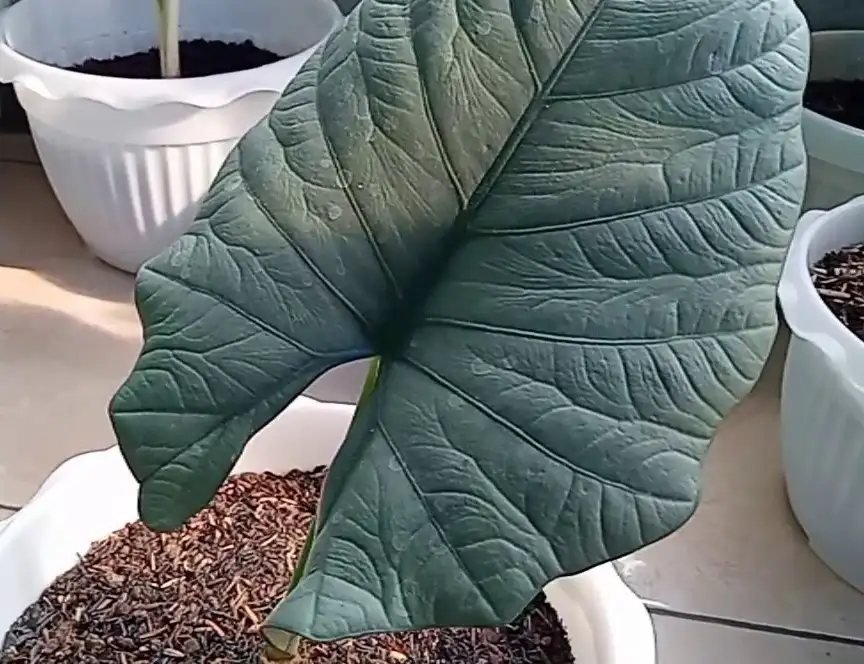
Whiteflies are small, sap-sucking insects. They are white and look like tiny pieces of cotton. They are slow and easy to recognize. You can remove them one by one with a cotton swab dipped in alcohol. Or, you can spray your plant with water and remove them.
Treat your Alocasia with neem oil or other gentle insecticides.
Tips for Keeping Your Alocasia Nebula Problem-Free
-
Provide porous soil with a high organic content (peat-heavy)
-
Keep the soil moist. Find the right balance. It should be semi-dry and semi-wet. Use a spray bottle for watering.
-
Keep it in bright but indirect light
-
Avoid sudden temperature changes, drafts, and heat sources
-
Provide plenty of humidity
-
Inspect regularly for pests and diseases and address them promptly
FAQs
Alocasia is highly toxic to both pets and children if ingested. They can also cause skin and eye allergies. Keep them out of the reach of children and pets.
What is good artificial lighting for Alocasia Nebula?
The best lighting for indoor ornamental plants is fluorescent bulbs. They emit a full spectrum of long-wave light. They are often labeled as “cool white.” They produce no heat, so they are good for indoor decorative plants.
Should you remove remaining leaves from Alocasia Nebula?
Yes, you can trim all yellow or remaining leaves from your Nebula. Use disinfected scissors or a knife. Do this as soon as possible to avoid bacterial or fungal issues.
Conclusion
Alocasia Nebula is a challenging plant to care for. Study it well. Get to know its needs and preferences. This beautiful plant has stunning green leaves. It will enhance your garden or home.


Leave a Reply